

Diversify Broadly
Own the whole market through broad-based, total-market index funds rather than betting on individual winners. “Buy the haystack.”




Trust & Wealth · Wealth Management
Investment Philosophy
A disciplined, lower-cost, broadly diversified approach to investing, built to help clients capture their fair share of the market’s long-term returns.
Overview
The investment management services of Chain Bridge Bank, N.A. are rooted in the principles of investment industry pioneer and index fund inventor John C. Bogle: diversify broadly, allocate prudently, consider costs, and stay the course.
We do not try to beat the market or time it. Instead, we aim to help each client capture their fair share of the market’s long-term returns through broad diversification, prudent allocation, lower costs, and long-term discipline.
Bogle (1929–2019) founded The Vanguard Group and created the first market-capitalization-weighted index fund in 1975. His principles have guided long-term, lower-cost investors for decades.
The framework
Own the whole market through broad-based, total-market index funds rather than betting on individual winners. “Buy the haystack.”
Set a stock-and-bond mix matched to goals, risk tolerance, time horizon, liquidity needs, and tax situation.
Minimize fees, trading costs, taxes, and other costs because investment costs compound over time.
Hold through volatility and ignore short-term noise. The discipline is time in the market, not timing the market.
In depth
Want to discuss how this philosophy applies to your goals?
Contact UsJohn C. Bogle, the founder of Vanguard Group, disputed the concept of a “Holy Grail” in investing. He defined the pursuit of the “Holy Grail” as the quest for the highest possible return without risk and stated that such a quest is likely to lead to disappointment, reminding us that the “Holy Grail” was a myth, not a reality.
Bogle expressed skepticism toward active management strategies, which often promise superior returns based on the manager’s skill in selecting investments. Instead, he advocated a simple, cost-efficient, and diversified investment approach that strives to mirror the market’s returns over the long term.
Bogle differentiated between investment and speculation. He viewed investment as the long-term ownership of businesses, focusing on their intrinsic value, while speculation involved betting on price changes, often in the short term.
We align with Bogle’s philosophy. We consider ourselves investors, not speculators, with a focus on the long-term performance of the assets we manage.
Bogle characterized the attempt to outperform the market as a “loser’s game” and owning the stock market over the long term as a “winner’s game.” He explained that before costs, trying to beat the market is a zero-sum game, but after costs, it becomes a losing proposition.
We adhere to Bogle’s philosophy by focusing on broad-based total market index funds, which are cost-efficient and aim to match the market’s returns. Our goal is not to outperform the market, but to help clients capture their fair share of the market’s returns.
Our investment strategy is firmly rooted in passive investing, with a particular emphasis on index funds. Bogle’s 1951 Princeton University honors thesis revealed a startling truth: the majority of investment managers fail to outperform the market. His subsequent years in the mutual fund industry only reinforced that initial insight and culminated in the creation of the first market capitalization-weighted index fund in 1975. Bogle’s innovation offered investors, for the first time, a cost-efficient, diversified, and passive investment alternative that aimed to mirror the market’s performance.
Bogle observed that the inability of a significant majority of active managers to outperform the market over the long term primarily stems from the higher management fees, trading costs, taxes, and other costs associated with active management.
The annual reports from Morningstar, such as the Morningstar Semiannual Active/Passive Barometer Reportopens in a new window — you are leaving chainbridgebank.com, further substantiate this observation. These reports consistently show that, over extended time horizons, the average passively managed fund tends to outperform most actively managed funds.
Our investment philosophy is simple yet powerful. We believe in the power of long-term investing and discourage attempts to “time the market” or chase the performance of fashionable trends or “hot” stocks or funds. Instead, we aim to match the market’s returns, using the power of compound returns.
We encourage clients to resist the urge to react to short-term market fluctuations and to keep their focus on long-term investment goals. As Bogle often said, “Time is your friend; impulse is your enemy.”
Time is your friend; impulse is your enemy.
John C. Bogle
We place a high priority on Bogle’s principle of broad diversification. Our approach to achieving optimal diversification involves the use of broad-based, total market, low-cost index funds. That strategy helps reduce risks linked to specific securities, industries, sectors, countries, geographies, and investment styles.
Bogle’s wisdom is famously distilled in his advice, “Don’t look for the needle in the haystack. Just buy the haystack.”
Don’t look for the needle in the haystack. Just buy the haystack.
John C. Bogle
That statement reflects his conviction in the value of diversification. Rather than trying to identify individual winners, Bogle championed the idea of embracing the entire market through index funds. He argued that this approach offers a more disciplined path to long-term investment results.
We believe in the importance of minimizing costs. In the realm of investment management, the value often lies in what you don’t pay for.
Bogle’s “Cost Matters Hypothesis” captured that principle. He explained that investment costs compound over time, leading to what he termed the “tyranny of compounding costs,” which he described as the “inverse of the miracle of compounding returns.” We seek to avoid the tyranny of compounding costs by minimizing investment costs.
We believe in setting realistic investing expectations and aim for reasonable long-term returns in both stocks and bonds. We understand that each client has unique financial goals, risk tolerance, time horizon, liquidity needs, and potential tax implications. Consequently, we offer tailored asset allocation strategies. These strategies adjust the allocation of stocks and bonds based on factors such as age, risk tolerance, liquidity needs, tax liabilities, spending needs, and investment goals.
Like Bogle, however, we generally do not advocate for further personalization or customization of investment strategies. Our philosophy encourages the approach of “buying right and holding tight,” which means we generally adhere to clients’ asset allocations despite market fluctuations. We also recognize the role of bonds in a balanced portfolio, keeping the ratio of stocks to bonds aligned with an investor’s financial position and risk tolerance.
Our investment approach aligns with Bogle’s perspective that a straightforward, lower-cost, and broadly diversified investment strategy may yield better risk-adjusted long-term results for many investors.
We uphold Bogle’s principle of “staying the course,” acknowledging that markets can exhibit volatility and unpredictability in the short term. Despite these fluctuations, historical data shows a general upward trend in the market over the long term.
Bogle summarized the “stay the course” philosophy with the admonition that “The secret to investing is there is no secret.” He underscored the importance of disregarding temporary market fluctuations, whether they occur daily, weekly, monthly, or yearly, and instead focusing on the underlying value of investments.
The secret to investing is there is no secret.
John C. Bogle
Bogle drew on a quote from Shakespeare’s Macbeth to emphasize his point, describing market noise as “full of sound and fury, signifying nothing.” He further asserted that “The stock market is a giant distraction from the business of investing,” reinforcing the notion that successful investing requires a steadfast focus on long-term growth rather than short-term market movements.
Our philosophy of lower-cost, simple, and transparent investing informs our investment management approach. These principles shape a disciplined, cost-effective, long-term investment strategy for clients working toward their financial goals.
Talk to our team
Our Trust & Wealth professionals work with clients and their advisors to apply this philosophy to individual goals, time horizons, liquidity needs, risk tolerance, and tax considerations.
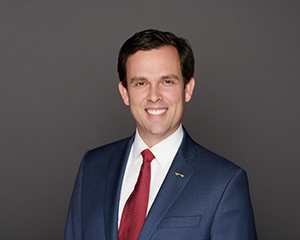
Senior Vice President, Chief Trust & Wealth Officer
Trust & Wealth Department

Frequently asked questions
Chain Bridge Bank, N.A. follows a disciplined, lower-cost, passive investment philosophy rooted in the principles of index-fund pioneer John C. Bogle: diversify broadly, allocate prudently, consider costs, and stay the course. The goal is not to outperform the market, but to help clients capture their fair share of the market’s long-term returns.
No. The Bank focuses on broad-based total market index funds that are designed to match the market’s returns rather than exceed them. This reflects Bogle’s view that attempting to outperform the market is a “loser’s game” after costs.
The Bank’s investment strategy is firmly rooted in passive investing, with an emphasis on broad-based, total-market, low-cost index funds. The approach is intended to mirror market performance over time, rather than depend on short-term security selection or market timing.
The Bank seeks to minimize investment costs. Bogle’s “Cost Matters Hypothesis” emphasizes that investment costs compound over time, reducing the benefit of compound returns.
The Bank generally adheres to a client’s asset allocation through market fluctuations. The philosophy discourages attempts to time the market or chase trends and instead emphasizes long-term goals, appropriate asset allocation, and discipline.
Important disclosures
Investment products and services are not FDIC insured, are not deposits, are not guaranteed by Chain Bridge Bank, N.A., and may lose value.
This page is for general informational purposes only and should not be considered individualized investment, tax, legal, or accounting advice. Clients should consult their own advisors.
Past performance is not a guarantee of future results. Investing involves risk, including possible loss of principal.
Start a conversation
Contact us to learn more about investment management services that draw on the principles of John C. Bogle. You may also review the profiles of our Trust & Wealth professionals.
Trust, fiduciary, investment management, and custody services are provided by Chain Bridge Bank, N.A. Investment products and services are not FDIC insured, are not deposits, are not guaranteed by the Bank, and may lose value.
Chain Bridge Bank, N.A. does not provide tax, legal, or accounting advice. Clients should consult their own advisors. References to John C. Bogle describe the investment principles that inform the Bank’s approach and do not imply affiliation with, or endorsement by, Mr. Bogle or The Vanguard Group.
Last updated: June 29, 2026.
